
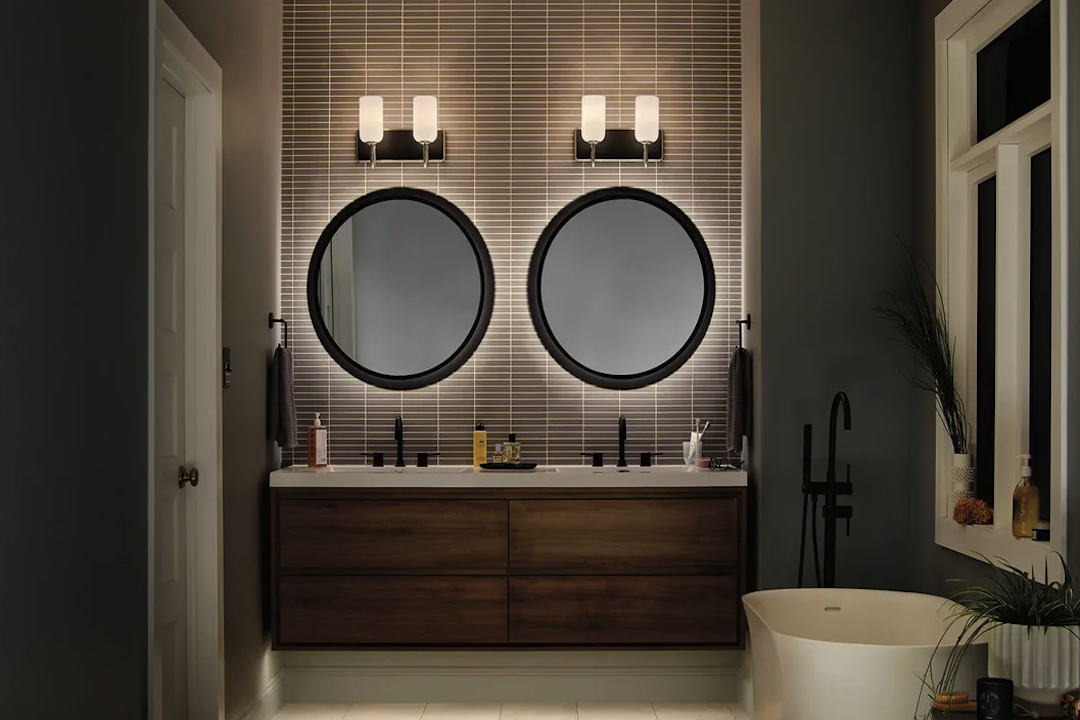
So, you’re looking to brighten up your bathroom vanity with some LEDs? Good call. The short answer is, yes, LED lighting is a fantastic upgrade for your bathroom vanity, offering better light quality, energy efficiency, and a lot more flexibility in design compared to traditional options. It’s not just about saving a few bucks on your electricity bill; it’s about seeing yourself clearly, making your space more functional, and even adding a touch of modern style.
LEDs have come a long way. Gone are the days of sterile, blue-tinged light. Today’s LED Top5lamp options offer a wide range of color temperatures, from warm, inviting tones to crisp, natural daylight, allowing you to choose exactly the ambiance you want for your morning routine or evening wind-down. Plus, their small size opens up a world of possibilities for integrated lighting that simply wasn’t practical before.
Choosing the Right LED Type
When you’re thinking about LEDs for your vanity, you’ve got a few main types to consider. Each has its own strengths, depending on what you’re trying to achieve.
LED Strips and Tapes
These are incredibly versatile. They come in long, flexible strips, often with an adhesive backing, making them easy to install almost anywhere. You can cut them to length, which is super handy for custom-sized vanities or if you want to illuminate specific areas like under a shelf or around the mirror. They’re great for ambient lighting or as a subtle accent.
Integrated LED Fixtures
Many modern vanity lights come with LEDs built right in. These are often sleek and contemporary, designed to provide a uniform, shadow-free light. You’ll find them in various styles, from linear bars above the mirror to sconces on either side. The benefit here is a clean, finished look without visible bulbs.
LED Bulbs (Retrofit)
If you already have a vanity light fixture you like, you can often just swap out your old incandescent or halogen bulbs for LED equivalents. This is the simplest and most cost-effective upgrade. Just make sure you get the right base type (e.g., E26, GU10) and wattage equivalent to match your existing setup.
Understanding Key LED Specifications
Navigating the world of LED lighting can feel a bit like learning a new language. But knowing a few key terms will help you make informed decisions.
Color Temperature (Kelvin – K)
This is all about the “color” of the light. Lower Kelvin numbers (like 2700K-3000K) produce a warmer, yellowish light, similar to traditional incandescent bulbs. This is often preferred for a cozy, relaxing atmosphere. Higher numbers (like 4000K-5000K) create a cooler, bluer light, closer to natural daylight. For tasks like makeup application or shaving, a neutral white (around 3500K-4000K) is generally recommended, as it shows colors accurately without being overly harsh.
Brightness (Lumens – lm)
Forget watts when talking about LEDs. Lumens are what really tell you how bright a light source is. For a vanity, you typically want enough lumens to appropriately illuminate your face without creating harsh shadows. A good starting point for a single vanity might be 1500-2000 lumens in total, spread across your fixtures. For a double vanity, you’d likely want more. It’s always better to have slightly more lumens than you think you need and then dim them down if desired.
Color Rendering Index (CRI)
This is a crucial one, especially for a bathroom vanity. CRI measures how accurately a light source reveals the true colors of objects compared to natural sunlight. A higher CRI (ideally 90 or above) means colors will appear more vibrant and true-to-life. This is essential for applying makeup precisely, choosing outfits, or just having an accurate reflection of yourself. Don’t skimp on CRI for your vanity lights.
Dimmability
Not all LEDs are dimmable, and those that are often require specific LED-compatible dimmer switches. If you want the flexibility to adjust the light intensity – perhaps brighter for grooming, softer for a relaxing bath – make sure your chosen LEDs and your switch are designed for dimming. Using a non-compatible dimmer can lead to flickering, buzzing, or even premature bulb failure.
Planning Your Vanity Lighting Layout
The placement of your lights is just as important as the lights themselves. Good lighting on a vanity means minimizing shadows on your face.
Side Sconces/Vertical Bars
This is often considered the ideal setup. Placing a light fixture on either side of the mirror, roughly at eye level, provides even illumination across your face, reducing shadows under your chin, nose, and eyes. Aim for fixtures that are about 28-36 inches apart, depending on the size of your mirror and vanity.
Overhead Bar Lights
A single horizontal bar light placed directly above the mirror can also work, but it’s more prone to casting shadows from your eyebrows, nose, and chin, especially if it’s too high or not bright enough. If you go this route, look for a fixture that projects light forward and downwards, rather than just straight down. Combining an overhead bar with some side lighting (even if it’s just ambient light from elsewhere in the bathroom) can mitigate some of the shadow issues.
Integrated Mirror Lighting
Many modern mirrors now come with LEDs built directly into the mirror itself, often diffused around the edges or as backlit panels. This can create a very clean, sleek look and provides excellent, even illumination. Just be sure to check the lumen output and CRI to ensure it’s bright enough and accurate enough for your needs.
Task vs. Ambient Lighting
Remember, your vanity lighting is primarily for task lighting. You need to see clearly. However, incorporating some additional ambient lighting – perhaps recessed lights in the ceiling or a small pendant – can add warmth and prevent the vanity area from feeling like a spotlight on a dark stage.
Installation Considerations
While many LED upgrades are DIY-friendly, some aspects might require a professional, especially if you’re dealing with new wiring or built-in fixtures.
DIY vs. Professional Installation
Swapping out LED bulbs is as easy as changing a light bulb. Installing LED strips often involves peeling and sticking. However, if you’re replacing an entire hardwired fixture, adding new wiring, or mounting heavy sconces, it’s generally best to call an electrician. Electrical work can be dangerous if you’re not experienced.
Power Source and Transformers
Low-voltage LED strips often require a driver or transformer to convert your household’s AC power to the DC power they need. These are usually included with the strips or specified by the manufacturer. Make sure you get the right voltage and wattage for your strips. Integrated LED fixtures will typically have their drivers built-in.
Water Resistance (IP Rating)
Bathrooms are damp environments. Any lighting fixture in a bathroom needs to have an appropriate Ingress Protection (IP) rating to protect against moisture. For areas directly above a shower or near a bathtub, higher IP ratings are required. For vanity lighting, especially if it’s not directly exposed to splashed water, a lower IP rating might be acceptable, but it’s always better to err on the side of caution. Look for fixtures rated for “damp” or “wet” locations.
Ventilation
While LEDs generate less heat than incandescents, they still produce some. Ensuring proper ventilation around integrated fixtures, especially in enclosed spaces, can help prolong their lifespan. This is usually more of a concern for recessed lighting than for vanity lights, but it’s worth a quick thought.
Maintenance and Lifespan
One of the big draws of LEDs is their long lifespan and low maintenance.
Lifespan Expectations
LEDs are rated for tens of thousands of hours – often 25,000 to 50,000 hours or more. This means you might literally never have to change the bulbs in your vanity fixtures again. Compare that to incandescents that burn out after a few thousand hours, and the convenience is clear.
Cleaning and Care
Just like any other fixture, your LED vanity lights will get dusty or splattered with toothpaste over time. Wipe them down periodically with a soft, damp cloth. Avoid harsh chemical cleaners, as they can sometimes damage the finishes or diffusers. For integrated LEDs, follow the manufacturer’s cleaning instructions.
Troubleshooting Common Issues
If your LEDs flicker, it’s often a sign of an incompatible dimmer switch. If they suddenly stop working, check the connections or the driver/transformer. While LEDs are much more robust than traditional bulbs, they aren’t entirely immune to issues, so keep your purchase receipts and warranty information handy.
A Few Final Thoughts
Upgrading your bathroom vanity with LED lighting is a practical step towards a more functional and aesthetically pleasing bathroom. It’s an investment that pays off not just in energy savings, but in daily comfort and improved routines. By understanding the different types of LEDs, their key specifications, and how to best position them, you can create a lighting scheme that genuinely enhances your space. Don’t be afraid to experiment a little, or to consult with a lighting professional if you’re undertaking a larger renovation. The difference good lighting makes in a bathroom, especially around the vanity, is substantial.